

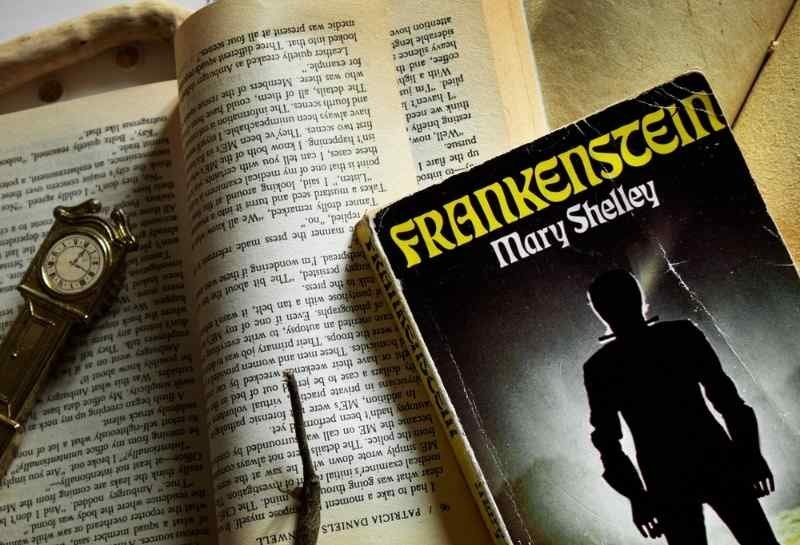
Frankenstein isn’t a long book: barely 200 pages in most editions, but it packs enough moral questions and intensity to inspire countless science fiction stories that came after. If you’re wondering whether Mary Shelley’s classic still deserves a spot on your reading list today, the simple answer is yes, absolutely.
Forget the stitched-up monster you see in movies. The actual book is stranger, sadder, and far more thoughtful. Shelley’s novel earned its place in classic literature not just for its creepy atmosphere but for how much it asks about life, suffering, and responsibility.
Things kick off in the Arctic, with explorer Robert Walton writing letters to his sister as he chases adventure near the North Pole. He ends up saving Victor Frankenstein, a shattered scientist from Geneva, who then unloads the story of how his ambition and grief made him try to create life from dead bodies.
Boiled down, Frankenstein is about two searches: Victor chasing forbidden knowledge and his creation desperately searching for acceptance. Eventually, both give in to revenge. The story itself is layered: Walton writes Victor’s account, and Victor tells us what the creature went through.
This matters because nothing is told straight. Every character is trying to make sense of themselves. Shelley doesn’t split people into simple heroes or villains; she gives us an ongoing debate about guilt, pain, and what we owe to each other.
The real power of the novel is its raw emotional punch. Victor’s wild experiment is over in a flash, but the fallout wrecks lives, families, and friendships.
Yes, Shelley’s writing is dramatic. But it’s not empty: her words have bite. She loves using sharp contrasts: stunning landscapes can’t comfort Victor, hope easily turns to fear, and scientific triumphs become living nightmares.
Read More: The Ultimate Reading Guide: Tips to Find Books You'll Love
Here’s a quick verdict:
It’s fair to say Victor can be a tough hang. He’s endlessly miserable and secretive, which does get repetitive. But that hopelessness fits his character: a guy stuck on his own guilt, always looking for excuses. If you like fast, modern books, stick with it.
The novel gets way more interesting when you stop asking, “Who’s the monster?” and start wondering, “Who actually has power?” Victor has everything: education, money, and status. The creature, for all his intelligence and strength, has nothing: no family, no identity, no one to look out for him.
Any useful Frankenstein analysis admits that both sides matter. Victor ditches his creation, refusing to take responsibility. Yet the creature chooses violence, hurting innocent people. Shelley doesn’t hand out neat answers or judgments.
Don’t picture Victor as some mad scientist with wild hair and crazy eyes. He’s a smart student, haunted by loss, obsessed with breaking the rules of nature.
His real failure isn’t the murders: it starts way earlier. He makes life without thinking about teaching, friendship, or duty. The instant he sees his creation, he runs away. And that choice sends everything downhill.
Some of the strongest parts of Frankenstein are the creature’s early days. While hiding and watching the De Lacey family, he slowly learns language and discovers books. He figures out, little by little, that people hate him for how he looks, not for anything he says.
His pain explains his rage, but Shelley never brushes aside his wrongs. The creature stays both victim and aggressor, leaving readers stuck in the middle, wrestling with what’s really right or wrong.
Frankenstein came out in 1818, right when people were obsessed with science and strong emotions. Mary Shelley didn’t paint science as purely good or evil. Instead, she looked at what happens when people rush ahead with new discoveries but don’t stop to think about the consequences.
You get all the classic Gothic touches here—crashing storms, eerie graveyards, lonely mountains, and a feeling of being cut off from everyone—but honestly, the scariest parts aren’t supernatural. The real chills come from relationships that fall apart: parent and child, maker and creation, the group and the outsider. Nobody seems to live up to their responsibilities.
That’s a big reason the book still hits a nerve whenever people talk about technology and ethics.
Shelley kicked off this story in 1816, hanging out near Lake Geneva with Percy Bysshe Shelley, Lord Byron, and John Polidori. She was just a teenager at the time and ended up writing something that outlived them all.
The first edition came out anonymously, but by 1831, Shelley released a new version with a fresh introduction and some tweaks—especially around fate and responsibility. If you want the punchier, more direct book, go with the original 1818 text. Some folks prefer the 1831 version because you can see how her thinking changed as she got older.
If you like wrestling with big moral questions, complicated narrators, and tragic stories, you’ll get a lot out of Frankenstein. If you’re after constant action, though, this isn’t that kind of book. The story’s more about memory and confession than wild chase scenes.
It’s a great pick for book clubs, students, classic lit fans, or anyone curious about ethics and the early days of science fiction.
Suggested Read: A Guide To Beginner Classic Books: Where to Start Reading
Honestly, Frankenstein’s actually shorter and way more emotionally tricky than its reputation suggests. The book’s real power is in how it refuses to give easy answers about creation, blame, learning, and revenge. Victor and the creature both stick in your mind, especially in those bleak final chapters.
Even after 200 years, Shelley won’t let us off the hook—if we create something new, what responsibilities follow? That question still matters, maybe now more than ever.
It's not exceptionally difficult, but it will demand your patience. The prose is formal, and the story structure, a series of embedded narratives, can feel strange initially. Luckily, chapters are quite short, and the characters’ internal struggles are easy to follow. There are annotated versions if you want the nuances of historical and literary references explained as you read.
My advice: pick a version with both an excellent introduction and plentiful notes. I think the 1818 text feels a little rawer, and the 1831 revisions are more tempered with Shelley's reflections over the years, but most readers will enjoy any edition with good commentary. The Penguin Classics, the Oxford World's Classics, and the Norton editions of Frankenstein are solid for nearly anyone.
The monster undeniably commits horrifying actions, and his guilt in these actions is never subtracted from the novel. Nevertheless, his own experiences of hardship and isolation provide a rationale for his violence, and readers commonly hold him up as an individual who is equally, and possibly simultaneously, victim and criminal, hence part of the continuing fascination with the book.
Definitely, the book explores so many issues in a readily understandable manner—the dangers of scientific hubris, parental abandonment, human loneliness and isolation, and moral culpability, to name only a few—that a book club could likely divide the book in half and find no shortage of discussion.
This content was created by AI